
Subtotal $0.00
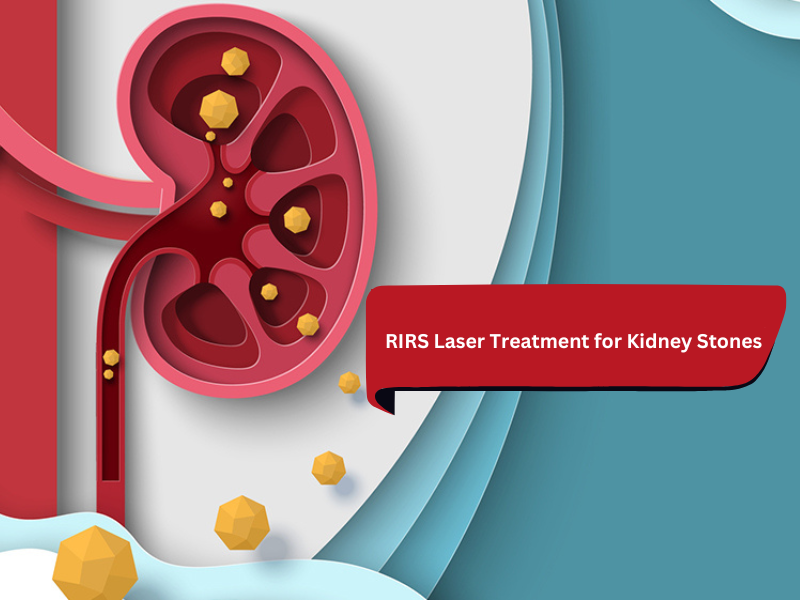
For anyone who has ever experienced the excruciating, radiating flank pain of a kidney stone, the priority is simple: get it out quickly, completely, and with the absolute minimum amount of pain.
As a premier destination for advanced urological care in Ahmedabad, patients frequently arrive at our clinic asking a variations of the same fundamental question: “Doctor, I want the latest laser treatment, but should I choose RIRS or Lithotripsy?”
Medical technology has advanced rapidly, moving past traditional open surgeries to ultra-precise, incision-free alternatives. However, choosing between Retrograde Intrarenal Surgery (RIRS) and Extracorporeal Shock Wave Lithotripsy (ESWL) or Laser Lithotripsy (URSL) isn’t about finding the “best” technology overall—it’s about identifying the right technology for the specific size, hardness, and anatomical location of your kidney stone.
This definitive guide breaks down the core differences, success rates, recovery timelines, and cost variables between RIRS and Lithotripsy in Ahmedabad, helping you make a highly informed decision alongside your urologist.
1. Deconstructing the Technologies: What Are RIRS and Lithotripsy?
To understand which procedure wins for your specific case, we must first pull back the curtain on how these distinct technologies operate within the urinary tract.
What is Lithotripsy (ESWL & Laser URSL)?
The term “Lithotripsy” literally translates to “stone crushing.” In modern urology, it generally refers to two distinct approaches:
- Extracorporeal Shock Wave Lithotripsy (ESWL): A completely non-invasive, outpatient procedure. You lie down on a specialized acoustic table, and a urologist uses external high-energy shock waves guided by real-time X-ray or ultrasound imaging to blast the stone from outside your body. The goal is to shatter the stone into sand-like fragments that you pass naturally over the coming days through your urine.
- Ureteroscopic Laser Lithotripsy (URSL): A minimally invasive procedure where a semi-rigid scope is guided up through the natural urinary passage to locate a stone stuck within the ureter (the tube linking the kidney to the bladder). Once identified, a microscopic laser fiber delivers thermal energy to break the stone down.
What is RIRS (Retrograde Intrarenal Surgery)?
RIRS surgery represents the technological pinnacle of endoscopic urology. During this minimally invasive procedure, the urologist introduces a highly flexible, fiber-optic digital ureteroscope through the urethra, moving “retrograde” (backward) up into the deepest, most complex inner chambers (calyces) of the kidney.
There are zero external cuts or incisions. Once the digital camera identifies the stone, a high-power Holmium or Thulium fiber laser is activated. The surgeon uses a technique called laser stone dusting, converting a solid stone into a super-fine, microscopic powder that washes out effortlessly with urine, entirely removing the agonizing pain of passing sharp stone fragments later.
2. Head-to-Head Comparison: RIRS vs. Lithotripsy
When comparing these options for kidney stone laser treatment, looking at the data helps clarify the right path forward.
| Performance Metric | Extracorporeal Shock Wave Lithotripsy (ESWL) | Advanced RIRS Surgery |
| Invasiveness Level | Completely Non-Invasive (No internal instruments) | Minimally Invasive (Endoscopic via natural channels) |
| Anesthesia Protocol | Local Sedation or Day-Care Analgesia | General or Spinal Anesthesia |
| Stone Size Target Range | Ideal for smaller stones (under 1 cm or 10mm) | Exceptional for large, multiple, or complex stones (up to 2.5 cm) |
| Stone Location Suitability | Upper kidney or upper ureter only | Any location, including difficult-to-reach lower pole chambers |
| Average Stone Clearance Rate | 60% – 80% (Often requires multiple sessions) | 95% – 98% (Complete clearance in a single session) |
| Post-Op Fragment Passing | Can be painful; risk of fragments blocking the ureter | Minimal to none due to advanced laser dusting/basketing |
3. The Core Decision Factors: When RIRS Takes the Crown
While ESWL appeals to many patients because it involves no internal scopes, it has distinct structural limitations. RIRS has become the gold-standard choice at our clinics across Ahmedabad—from C.G. Road to Vastrapur—due to three decisive clinical advantages:
A. The “One-and-Done” Success Rate
The biggest drawback of shockwave lithotripsy is predictability. If a stone is exceptionally dense or hard (such as calcium oxalate monohydrate), shockwaves often bounce off, requiring patients to return for two, three, or even four distinct sessions.
Conversely, the advanced lasers used in RIRS surgery in Ahmedabad do not care about stone density. The high-frequency thermal energy pulverizes even the hardest stones on contact, delivering a 95%+ stone clearance rate in a single, definitive session.
B. Anatomical Versatility & Digital Control
The human kidney is structured like a maze of down-sloping pathways. Shockwave lithotripsy struggles significantly with lower pole kidney stones because gravity prevents fragments from clearing easily.
Because RIRS utilizes a highly flexible scope that can deflect up to 270 degrees, an expert urologist can navigate deep into these difficult lower poles, break the stone down completely, and manually extract fragments using a microscopic Nitinol stone basket.
C. Preventing “Steinstrasse” (Stone Street)
When shockwaves break a large 1.5 cm stone into multiple medium-sized chunks, those chunks can travel down the narrow ureter simultaneously, causing a dangerous roadblock known medically as Steinstrasse. This can cause acute kidney swelling and requires an emergency secondary surgery. Because RIRS turns the stone into a fine, dust-like powder, this structural risk is effectively eliminated.
4. Recovery Timelines: What to Realistically Expect
For busy professionals in Ahmedabad’s growing corporate and commercial sectors, minimizing downtime is crucial.
- ESWL vs RIRS Recovery Time: Shockwave lithotripsy technically allows you to leave the hospital within a couple of hours. However, the actual recovery can wind up extended over days or weeks as you painfully pass sharp stone fragments at home.
- The RIRS Pathway: RIRS is performed under general anesthesia, ensuring you feel absolutely zero pain during the intervention. It typically involves a brief 24-hour monitoring stay at the clinic. By the second or third day, most patients are fully back to work and normal routine activities.
5. Cost Transparency: Evaluating Your Investment
When assessing laser lithotripsy cost in Ahmedabad, it is important to calculate the entire treatment journey rather than just the initial price tag.
- Initial Shockwave Lithotripsy (ESWL) Cost: Tends to be lower upfront per session because it requires no high-end disposables, operating room resources, or deep anesthesia fees. However, if your stone requires 3 separate sessions to fragment completely, the cumulative cost of repeated hospital visits, repeated imaging, and prolonged time away from work can quickly exceed expectations.
- RIRS Surgery Investment: RIRS has a higher upfront cost. This is driven by the use of advanced digital flexible scopes, specialized laser fiber lines, operating room sterilization, and dedicated anesthesia care. However, because it resolves the issue in a single session for the vast majority of patients, it frequently proves to be the most cost-effective, time-saving, and predictable choice.
Most major health insurance policies and Corporate Mediclaim plans in India fully cover RIRS surgery, as it is classified as a medically essential, advanced day-care procedure.
Final Verdict: Which Advanced Technology Wins?
- Choose Shockwave Lithotripsy if: Your kidney stone is quite small (under 8mm), relatively soft, located in the upper portion of the kidney, and you want a non-surgical approach with no internal instruments.
- Choose RIRS Surgery if: You want a definitive, single-session resolution for a stone larger than 10mm, have multiple stones across one or both kidneys, have a very dense/hard stone composition, or simply want to maximize your chance of a rapid, predictable return to work.
If you are dealing with persistent flank pain, don’t wait for complications to arise. Consult the best urologist in Ahmedabad for kidney stones to review your CT scan and tailor a precise, comfortable path to clear your stones permanently.
🔍 Frequently Asked Questions (FAQs)
1. Is RIRS surgery painful during or after the procedure?
No, the procedure itself is performed under general or spinal anesthesia, meaning you will be completely asleep and feel no pain whatsoever. Post-operatively, you may experience a mild, temporary burning sensation during urination or a dull ache in the flank area for a few days, which is highly manageable with standard oral medications prescribed by our team.
2. Can RIRS remove multiple kidney stones in a single session?
Yes. One of the primary clinical advantages of RIRS over lithotripsy is its ability to treat multiple stones scattered across different chambers of the same kidney in one go. The flexible scope allows the surgeon to move seamlessly from one chamber to the next, dusting every stone visible on the high-definition display.
3. How long does a patient need to keep the DJ stent inside after RIRS?
The DJ stent is typically left in place for anywhere between 7 to 14 days, depending on the volume of stone dust cleared and the natural width of your ureter. Removing the stent is a quick, 2-minute outpatient procedure performed under local numbing jelly, requiring no anesthesia or hospital stay.
4. What happens if a kidney stone is too hard for shockwave lithotripsy?
If a stone has a high Hounsfield Unit (HU) rating on a CT scan—indicating it is extremely dense and hard—external shockwaves (ESWL) will struggle to break it apart effectively. In these cases, attempting lithotripsy often results in incomplete fragmentation. RIRS is highly recommended here, as its advanced laser fibers break down even the highest-density stones with ease.
5. Can I go home the same day after undergoing RIRS surgery in Ahmedabad?
While RIRS can be performed as a day-care procedure, we typically recommend a brief 24-hour hospital stay. This allows our clinical team to monitor your initial post-anesthesia recovery, ensure adequate hydration, and confirm that your urine is clearing cleanly before you transition back home.

Dr. Ankit Vaishnav is a highly skilled Consultant in Urology, Robotic Surgery, and Renal Transplantation with over 8+ years of clinical experience in Urology. He began his medical journey with an MBBS from NHL Municipal Medical College in 2013, followed by a Master of Surgery (MS) in General Surgery from Sheth VS Hospital & Smt NHL Medical College in 2016. His dedication to surgical excellence led him to pursue a super-specialization in Urology, earning the esteemed MCh degree (University First) from IPGMER & SSKM Hospital, Kolkata. Additionally, he is a certified Kidney Transplant Surgeon and has completed advanced Robotic Surgery training under a recognized mentorship program, making him a certified Robotic Urologist.
Latest posts by Dr. Ankit Vaishnav (see all)
- RIRS vs. Lithotripsy: Which Advanced Laser Technology Wins for Stone Removal? - July 16, 2026
- Laser Urology Surgery Treatment in Ahmedabad/Gujarat - July 15, 2026
- Kidney Transplant Surgery Treatment in Ahmedabad/Gujarat - July 11, 2026

